
A commercial espresso machine is an important investment for any coffee shop, restaurant, hotel, or workplace that serves espresso-based drinks. The right machine can help your team prepare espresso, cappuccinos, lattes, and other coffee drinks efficiently during busy periods.




However, not every commercial espresso machine suits every business. A small café may need a compact single-group model, while a busy coffee shop may benefit from a two-group or three-group machine with greater serving capacity.
In this guide, we explain the main types of commercial espresso machines, the features to compare, and how to choose equipment that fits your business, daily workload, and available space.
Table of Contents
Best Commercial Espresso Machines at a Glance
The best choice depends on your business type, expected drink volume, staffing, and installation requirements.
| Business need | Machine type to consider | Why it may fit |
|---|---|---|
| Small café | Commercial single-group machine | Uses less counter space than many larger models |
| Busy coffee shop | Commercial two-group machine | Allows baristas to prepare multiple drinks in parallel |
| High-volume café | Commercial three-group machine | Offers more simultaneous brewing capacity |
| Restaurant | Commercial machine with suitable steaming capacity | Helps staff prepare espresso and milk-based drinks during service |
| Office or hospitality area | Commercial or prosumer machine suited to expected demand | May fit locations with lower or moderate drink volumes |
| Trained baristas | Semi-automatic commercial espresso machine | Provides hands-on control over extraction |
| Businesses prioritizing consistency | Volumetric or programmable commercial machine | Can standardize shot volumes when configured correctly |
These are starting points, not universal rules. Actual capacity depends on machine design, grinder performance, barista workflow, drink complexity, and peak demand.
Best Commercial Espresso Machines of the Year

Our review
Breville Dynamic Duo Espresso Machine Set | Dual Boiler & Smart Grinder Pro | Stainless Steel | Model BEP920BSS
- Experience third wave specialty coffee at home with the Breville Dynamic Duo Espresso Machine Set.
- Features a Dual Boiler system for simultaneous extraction and steaming, ensuring maximum flavor potential.
- Programmable precision conical burr grinder with 60 grind settings for perfect results on any brew.
- Professional 58 mm stainless steel portafilter accommodates a 22g dose for full-bodied coffee.
- Low pressure pre-infusion followed by 9 bar extraction for rich, creamy espresso.
- Powerful steam at 266°F for creating silky microfoam milk ideal for lattes.
- Offers volumetric or timed shot control for customizable espresso servings.
- Made of durable brushed stainless steel, with a 2-year warranty for the Dual Boiler and 1-year for the grinder.

Our review
Diletta Bello Espresso Machine | E61 Heat Exchanger | Manual Control | 3-Liter Capacity | Made in Italy | Stainless Steel
- Handcrafted in Italy: Each Diletta Bello espresso machine is meticulously made in Milan.
- Durable Stainless Steel: Features a sturdy stainless steel case, frame, and boiler for long-lasting quality.
- Manual Control: All-manual brew and steam controls enhance your barista skills.
- Heat Exchanger Boiler: Allows for simultaneous brewing and steaming for efficient coffee preparation.
- Multiple Color Options: Available in polished stainless, black, or white powdercoat finishes to suit your kitchen style.
- Eco-Friendly Mode: Optional 60-minute eco timer helps save energy.
- 3-Liter Capacity: Equipped with a large water capacity for making multiple drinks.
- Versatile Use: Ideal for preparing cappuccinos, espressos, lattes, and mochas.
Our review
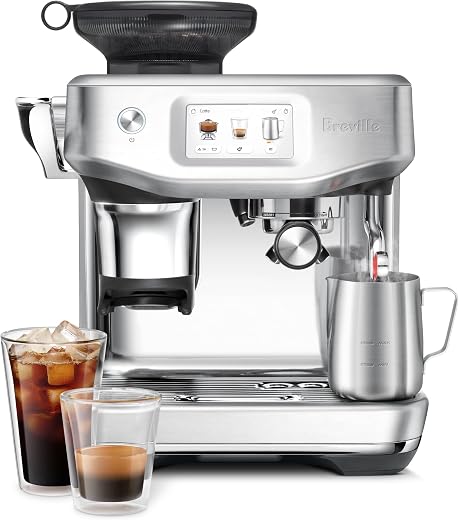
Breville BES881BSS Barista Touch Espresso Machine, Brushed Stainless Steel Finish
- Auto MilQ Steam Wand: Automatically adjusts milk temperature and texture for silky microfoam, ideal for latte art.
- Cold Brew Function: Effortlessly create refreshing cold brew coffee at home, expanding beverage options.
- Alternative Milk Settings: Features three settings for different milk types, perfect for oat milk lattes and more.
- Free Specialty Coffee: Includes two bags of specialty coffee when you purchase and register the machine (terms apply).
- Barista Guidance: Step-by-step instructions and real-time feedback ensure precise extraction and microfoam.
- Assisted Tamping: Intelligent dosing and 22lb tamping make grinding, dosing, and tamping easier for an impressive puck.
- ThermoJet Heating: Reaches precise extraction temperature in just 3 seconds, minimizing wait time for beverages.
- Touchscreen Interface: Intuitive touchscreen allows selection from 13 presets or customization of up to 6 drinks.

Our review
Gaggia Accademia Premium Italian Fully Automatic Espresso Machine with 19 Custom Drink Options, 0.5 Liters, Model RI9782/46 in Brushed Stainless Steel
- Premium Design: Brushed stainless steel housing, made in Italy with a modern aesthetic.
- User-Friendly Interface: Features a glass touchscreen display for easy navigation.
- Versatile Drink Options: Offers 19 customizable beverages, including various coffee and espresso types.
- Enhanced Performance: Equipped with a commercial steam wand for superior milk frothing.
- Convenient Features: Includes an auto clean function, integrated coffee grinder, and removable water tank.
- Super Automatic Operation: 1400 watts power with a user-friendly touchscreen interface for effortless brewing.
- Ideal for Gifting: Perfect for occasions like birthdays, anniversaries, housewarmings, and gifts for coffee lovers.
- Compact Dimensions: Measures 16.5"D x 11.1"W x 15.2"H, designed for home coffee stations and modern kitchens.

Our review
De'Longhi EC9665M La Specialista Maestro Espresso Machine in Stainless Steel, Silver and Black
- Model: De'Longhi EC9665M La Specialista Maestro Espresso Machine in Stainless Steel, Silver, and Black.
- Grinding Technology: Features Sensor Grinding Technology with 8 adjustable settings for precise digital dosing.
- Smart Tamping Station: Ensures optimal pressure and dosing with less mess for perfect espresso extraction.
- Dynamic Pre-Infusion: Adapts to coffee density for even saturation of grounds before brewing.
- Temperature Control: Offers 5 infusion profile settings to optimize brewing based on bean type.
- Manual Operation: Designed for manual brewing with a capacity of 100 ml and a powerful 1450-watt motor.
- Included Components: Comes with essential accessories like a stainless steel milk frothing jug, filters, and cleaning tools.
- Warranty: Backed by a 2-year manufacturer warranty for peace of mind.

Our review
De'Longhi La Specialista Maestro Espresso Maker with Integrated Coffee Grinder
- Built-in grinder with 15 precise settings for optimal single or double dose and grind size.
- Smart Tamping Technology for effortless and consistent tamping, ensuring even extraction.
- 19 bar Italian pump for optimal brewing pressure during pre-infusion and extraction.
- Active Temperature Control with 5 infusion temperatures for customizable brewing.
- Automatic Frothing and manual steam wand for personalized drink crafting.
- Features include Auto Clean Function, Auto Shut-Off, and a removable water tank.
- Suitable for home or office use, capable of making Americano, Cappuccino, Espresso, Iced Coffee, and Latte.
- Semi-automatic operation with a 1600-watt corded electric power source.

Our review
Meraki Espresso Machine with Dual Boilers, Integrated Grinder, and Dual Scales
- Professional Home Espresso System: Designed for serious home baristas with precision preparation and guided extraction.
- Independent Dual Boilers: 350 ml brew and 550 ml steam boilers allow simultaneous extraction and milk texturing with PID control for thermal stability.
- Weight-Based Dose and Yield: Integrated scales measure coffee dose and espresso yield with 0.2 g accuracy for precise recipe control.
- Espresso-Tailored Burr Grinder: Features 45 marked settings and micro-adjustments for various coffee profiles, utilizing anti-static technology.
- Commercial Rotary Pump: Provides steady 9-bar extraction and controlled pre-infusion with a 58 mm portafilter for professional performance.
- Semi-Automatic Operation: Offers hands-on control for espresso preparation.
- Robust Capacity: 2-liter water reservoir, powered by 1600 watts at 120 volts.
- Modern Design: Sleek black finish with included components for enhanced functionality.

Our review
Diletta Mio White Espresso Machine
- PID Brew Boiler: Insulated for quick heat times and shot stability.
- Second Steam Circuit: 1000W thermoblock for on-demand steaming of cappuccinos and lattes.
- Shot Timer: Integrated PID screen functions as a timer for tracking shot duration.
- Pressure Gauge: Brew pressure gauge aids in shot quality diagnostics and adjustments.
- Adjustable OPV: Externally adjustable overpressure valve for advanced pressure tuning.
- Italian Craftsmanship: Hand-built in Milan, Italy, ensuring high quality and durability.
- Semi-Automatic Operation: User-friendly interface with buttons for easy brewing.
- 2-Year Warranty: Includes parts warranty covered by Seattle Coffee Gear.

Our review
Rancilio Silvia Pro X Black Espresso Maker
- Dual Boiler System: Features a 1-liter steam boiler and 300ml brew boiler for simultaneous brewing and steaming.
- PID Temperature Control: Equipped with dedicated PIDs for precise temperature management, adjustable to-the-degree.
- Soft Preinfusion: Offers adjustable low-pressure preinfusion for enhanced shot quality.
- Shot Timer: Front-facing PID screen functions as a shot timer during brewing.
- Programmable Auto On: Allows users to set a programmable wake-up time for brewing convenience.
- Premium Portafilter: Includes an upgraded stainless steel portafilter from Rancilio Specialty.
- Semi-Automatic Operation: Designed for baristas seeking fine control over espresso shots.
- Durable Stainless Steel Construction: Robust design with a classic black finish, measuring 16.5"D x 10"W x 15.2"H.

Our review
De'Longhi PrimaDonna Aromatic Fully Automatic Espresso Maker
- Fully Automatic Operation: Easy-to-use touchscreen interface for effortless brewing.
- Adaptive Grinding Technology: Automatically adjusts grind settings for optimal extraction based on bean type.
- Integrated Burr Grinder: Ensures long-lasting performance and freshness of coffee.
- Diverse Recipe Options: Curated menu with 38 preset recipes for espresso, drip coffee, iced coffee, and more.
- LatteCrema Technology: Creates adjustable textures for dairy and plant-based milks, including hot and cold froth.
- Convenient Features: Includes auto clean function, auto shut-off, and removable, dishwasher-safe components.
- Powerful Specifications: 1350 watts, 120 volts, with a durable design and modern titanium finish.
- Warranty: Comes with a 2-year warranty, plus an additional year with product registration.

Our review
Diletta Bello+ Espresso Machine | E61 | PID Temperature Regulation | Shot Timer | Programmable Preinfusion | Artisan Crafted in Italy (Black)
- PID Temperature Control: Easily view and adjust steam boiler temperature with a front-mounted PID screen.
- Shot Timer: PID screen functions as a shot timer to track espresso brewing progress.
- Low Power Eco Mode: Reduces boiler temperature for energy savings while maintaining quick recovery to brew temperatures.
- Programmable Preinfusion: Allows up to 10 seconds of passive preinfusion for enhanced shot consistency.
- Durable Construction: Made with stainless steel for long-lasting performance in your kitchen.
- Manual Controls: Focus on barista skills with all-manual brew and steam controls.
- Artisan Crafted: Handcrafted in Milan, Italy, ensuring quality and style.
- Versatile Use: Suitable for making espresso, cappuccino, and lattes.
Our review
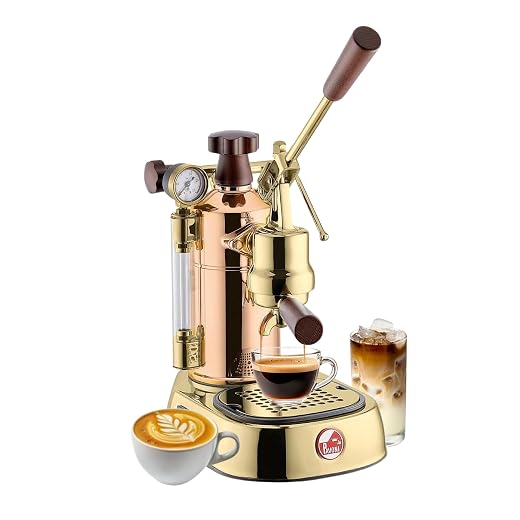
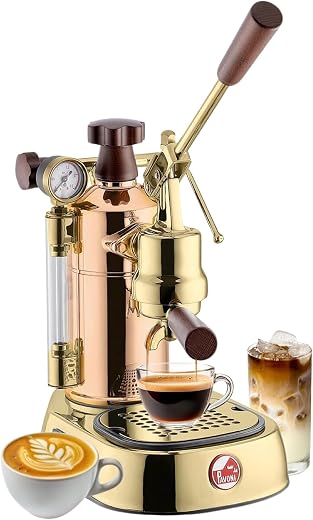
La Pavoni Professional 16-Cup Espresso Machine - Copper and Brass Design with Bottomless Portafilter - 38oz Boiler and Pressure Gauge - Manual Lever Operation - Crafted in Italy
- Elegant Design: Features a polished copper boiler and solid brass base with wooden accents, combining classic style and durability.
- Manual Lever Operation: Offers a piston-driven manual lever for precise control over espresso extraction, promoting rich flavor.
- High Capacity: 38 oz. boiler brews up to 16 shots (2 oz. each) at a time, ideal for home use or entertaining guests.
- Real-Time Feedback: Equipped with a built-in pressure gauge and thermostat for consistent brewing temperature and safety.
- Barista-Grade Features: Includes a bottomless portafilter for improved visibility during extraction and technique refinement.
- Versatile Use: Designed specifically for making espresso with a reusable filter, perfect for coffee enthusiasts.
- Compact Dimensions: Measures 14"D x 10"W x 16"H and weighs 12.5 pounds, making it suitable for various kitchen spaces.
- Handcrafted in Italy: La Pavoni's renowned craftsmanship ensures performance and longevity in every machine.

Our review
Nuova Simonelli Appia Espresso Machine - 2 Group - Semi-Automatic
- Model: Nuova Simonelli Appia Life Volumetric 2 Group - Semi-Automatic
- Type: Espresso machine designed for home and office use
- Features:
- Cool Touch Wands for safe steaming
- Push Pull Steam functionality
- Soft Infusion System for optimal extraction
- Manual dosing only
- Capacity: 11 liters with a reusable filter
- Dimensions: 30.71"D x 21.42"W x 20.87"H
- Power: Operates on 220 volts AC
- Included Components: Milk frother and cup warmer
- Color & Material: Black plastic design, compact style
Our review
Nuova Simonelli AURELIA WAVE DIGIT Volumetric 3-Group Espresso Maker
- Professional Volumetric System: Advanced technology for precise and consistent espresso extraction with programmable shot volumes.
- Three Group Configuration: Three independent group heads allow for simultaneous preparation of multiple espresso drinks, ideal for high-volume settings.
- WAVE Technology: Innovative system for optimal brewing temperature, ensuring superior flavor profiles and consistency in espresso shots.
- Digital Control Interface: Intuitive display panel for easy programming and monitoring of temperature settings, shot volumes, and diagnostics.
- Commercial Grade Construction: Built with durable materials and components to withstand continuous daily use, ensuring long-lasting performance.
- Fully Automatic Operation: User-friendly design with button inputs for effortless espresso preparation.
- Capacity: 17 liters, suitable for busy cafes and restaurants.
- Compact Dimensions: Measures 24"D x 41"W x 22"H for efficient space utilization.
Our review
Nuova Simonelli Aurelia WAVE Semi-Automatic Espresso Machine with 3 Groups
- Model: Nuova Simonelli Aurelia WAVE Semi-Automatic Espresso Machine with 3 Groups
- Warranty: 2-year manufacturer warranty
- Boiler Capacity: 17 liters
- Features: Cool touch steam wands, Soft-Infusion System (SIS), Push-pull steam levers, and automatic group cleaning
- Lighting: Surface LEDs and barista lights for enhanced visibility
- Recommended Use: Ideal for commercial use in high-quality and specialty coffee shops
- Operation: Semi-Automatic with reusable filter for ground coffee
- Color: Black

Our review
Nuova Simonelli Appia Compact 2-Gr (220 Volt) Volumetric Espresso Machine with Smart Wand - Mappiacvol
- Brand: Nuova Simonelli
- Model: Appia Compact 2-Gr (220 Volt) Volumetric Espresso Machine
- Features: Soft Infusion System (SIS) and cool touch wands for safe operation
- Capabilities: Fully automatic operation for cappuccino and espresso preparation
- Capacity: 7.5 liters, designed for commercial use
- Dimensions: 21.65" D x 21.65" W x 21.65" H; weight of 150 pounds
- Materials: Stainless steel exterior with copper components
- Included Components: Milk frother and hot water spout for added convenience
You may like: 7 Espresso Machine Types: Which One Is Right for You?
7 Best Commercial Espresso Machine Types to Consider
Commercial equipment varies considerably in price, installation needs, and output. Instead of choosing a machine based only on its advertised pump pressure or appearance, compare its intended workload and operating requirements.
1. Best for Small Cafés: Commercial Single-Group Espresso Machine
A commercial single-group espresso machine is worth considering for a small café, bakery, food truck, or business with limited counter space and moderate espresso demand.
A single-group design has one brewing group, so you may need to prepare drinks in sequence more often than on a multi-group machine. This can be sufficient when espresso orders are relatively spread out.
What to look for:
- A commercial-rated brewing system
- Stable brewing temperature
- A steam wand suited to your milk-drink volume
- A reliable commercial grinder
- Practical access for cleaning and maintenance
- Power and water requirements compatible with the premises
Who should choose it: Small businesses that want commercial equipment without immediately investing in a larger multi-group setup.
2. Best for Busy Coffee Shops: Commercial Two-Group Espresso Machine
A commercial two-group espresso machine is a common choice for coffee shops that serve a steady flow of espresso-based drinks.
Two brewing groups allow baristas to work on more than one espresso order at a time. This can improve workflow during busy periods, particularly when the machine has adequate steam capacity and is paired with a suitable grinder.
Key features to compare include programmable shot volumes, boiler capacity, temperature control, steam-wand performance, and service support.
Who should choose it: Coffee shops and cafés with regular customer traffic that need more throughput than a small single-group machine can provide.
3. Best for High-Volume Businesses: Commercial Three-Group Espresso Machine
A three-group commercial espresso machine may suit busy cafés, hotels, and hospitality businesses with substantial peak-hour demand.
The extra brewing group lets you prepare more shots simultaneously. However, the machine also needs sufficient counter space, electrical capacity, water supply, and staff training.
Before buying, ask the manufacturer or dealer about expected drink output, recovery performance during continuous use, installation requirements, and local maintenance support.
Who should choose it: Established businesses that can justify the additional capacity and operating requirements of a larger machine.
4. Best for Hands-On Baristas: Semi-Automatic Commercial Espresso Machine
A semi-automatic commercial espresso machine gives trained baristas direct control over important parts of the brewing process. Depending on the model, the barista starts and stops extraction manually while controlling grinding, dosing, and tamping.
This setup can suit specialty coffee shops that want to adjust recipes for different beans and customer preferences.
The trade-off is that consistency depends heavily on training, workflow, grinder adjustment, and proper maintenance. A semi-automatic machine is not automatically better than a programmable model; the best choice depends on your team and service style.
Who should choose it: Specialty cafés and businesses with staff who are comfortable managing espresso preparation.
5. Best for Repeatable Drink Preparation: Volumetric Commercial Espresso Machine
A volumetric espresso machine uses programmed water volumes to stop a shot automatically. This helps staff repeat established espresso recipes without manually stopping every extraction.
For businesses with several baristas, programmable shot volumes can simplify training and support a more consistent workflow. The operator must still use appropriate coffee dosing, grind settings, and extraction recipes.
Check how many programmable buttons are available, whether settings can be adjusted by group, and how easy the machine is to maintain.
Who should choose it: Cafés, restaurants, and hospitality teams that want a repeatable workflow across multiple staff members.
6. Best for Restaurants: Commercial Espresso Machine with Strong Milk-Steaming Capability
Restaurants often prepare espresso alongside other menu items, so the best commercial espresso coffee machine should fit the pace and layout of the kitchen or beverage station.
If the menu includes cappuccinos, lattes, and flat whites, consider steam-wand access, milk-steaming capacity, heat recovery, and how easily staff can clean the equipment between orders.
A compact commercial machine may be sufficient for a restaurant that serves relatively few espresso drinks. A busier restaurant may need a multi-group configuration.
Who should choose it: Restaurants, hotels, and food-service businesses that serve espresso-based drinks as part of a wider menu.
7. Best for Offices and Hospitality Spaces: Commercial Machine Matched to Demand
Offices, meeting venues, hotel lounges, and self-service beverage areas have different needs from busy cafés. Some locations require a traditional commercial espresso machine, while others may be better served by a fully automatic bean-to-cup system.
A traditional machine generally requires more operator involvement and staff training. A fully automatic system can simplify drink preparation but may have different limitations in customization, maintenance, and simultaneous output.
Estimate how many drinks employees or guests will request during the busiest period before deciding.
Who should choose it: Businesses that want coffee service tailored to staff numbers, guest demand, available space, and operator experience.
How to Choose the Best Commercial Espresso Machine
Buying a commercial espresso machine involves more than comparing features. The machine must fit the business, the premises, and the people who will operate it.
1. Estimate Daily and Peak-Hour Demand
Start by estimating how many espresso-based drinks you expect to serve each day. Then estimate how many orders arrive during your busiest 15- or 30-minute period.
Peak demand is particularly important. A machine that handles a quiet afternoon comfortably may struggle during a morning rush if its brewing and steaming capacity cannot keep up.
Ask suppliers for realistic performance guidance based on your menu and expected workflow rather than relying on a single advertised output figure.
2. Choose the Right Number of Brewing Groups
The group count influences how many espresso preparations can happen simultaneously.
- Single-group: May suit smaller operations with moderate demand.
- Two-group: A practical configuration to investigate for many busy cafés.
- Three-group or larger: May suit high-volume businesses with sufficient space, staff, and infrastructure.
More groups do not automatically guarantee faster service. Grinder speed, barista skill, steam capacity, drink complexity, and workflow also affect throughput.
3. Compare Boiler Design and Temperature Stability
Commercial espresso machines use different boiler and heating configurations. Some designs prioritize brewing and steaming capacity, while others focus on temperature control and energy efficiency.
Compare boiler capacity, temperature management, recovery performance, and whether brewing and steaming can operate effectively at the same time.
For a busy business, ask the dealer how the machine performs under sustained service conditions.
4. Decide Between Semi-Automatic and Programmable Controls
A semi-automatic machine provides more direct control over extraction. A volumetric machine can stop shots at programmed water volumes, making repeated preparation easier.
Your decision should reflect your team’s skill, staff size, and how standardized your recipes need to be.
5. Check Grinder Compatibility
A commercial espresso machine needs a grinder that can meet your service volume. A slow grinder can become a bottleneck even when the espresso machine has several brewing groups.
Compare grind adjustment, dosing workflow, consistency, serviceability, and the grinder’s ability to keep pace during peak periods.
Also confirm whether the machine includes a grinder. Many traditional commercial espresso machines require a separate commercial grinder.
6. Confirm Plumbing, Electrical, and Space Requirements
Before placing an order, confirm the machine’s dimensions, clearance needs, electrical supply, water connection, drainage requirements, and ventilation recommendations.
Some commercial models require professional installation and a dedicated electrical circuit. Requirements vary by model, so consult the manufacturer and a qualified installer before purchasing.
For mobile businesses or locations without suitable plumbing, consider purpose-built alternatives rather than assuming a traditional café machine will work.
7. Evaluate Cleaning and Maintenance
Commercial machines require regular cleaning to maintain performance and manage coffee and milk residue.
Check the cleaning process for the group heads, portafilters, steam wands, drip tray, and any automatic cleaning features. Ask about recommended service intervals, replacement parts, warranty coverage, and the availability of qualified technicians near your business.
A machine with accessible service components and dependable local support may be more practical than one with attractive specifications but limited servicing options.
8. Compare Total Cost of Ownership
The purchase price is only one part of the cost. Budget for a commercial grinder, water filtration, installation, accessories, cleaning supplies, staff training, servicing, and replacement parts.
A lower-priced machine may not be the best value if it cannot meet peak demand or if local service is difficult to arrange. Likewise, a large premium model may be unnecessary for a small business.
Compare the total setup cost and the machine’s expected role in your business before deciding.
Commercial vs. Home Espresso Machines
Commercial espresso machines are designed for business environments and sustained service demands. Home machines generally prioritize smaller dimensions, simpler installation, and lower-volume use.
| Feature | Commercial espresso machine | Home espresso machine |
|---|---|---|
| Intended use | Cafés, restaurants, hospitality, and some offices | Household coffee preparation |
| Brewing groups | Often one or more, depending on model | Commonly one |
| Workflow | Designed around repeated service and staff operation | Designed around individual or household use |
| Installation | May require plumbing and specialized electrical arrangements | Often simpler, depending on the model |
| Maintenance | May require scheduled professional servicing | Usually less demanding, though regular cleaning remains necessary |
| Purchase and setup cost | Often higher, especially for multi-group equipment | Broad range of budgets |
| Capacity needs | Must match peak business demand | Must match household use |
Some premium home machines and prosumer models offer advanced features, but you shouldn’t assume they’re suitable for commercial use. Check the manufacturer’s intended-use guidance and warranty conditions before operating a home model in a business.
Common Mistakes to Avoid When Buying a Commercial Espresso Machine
Choosing by pump pressure alone
A higher advertised pressure number does not automatically mean better espresso. Temperature stability, grinder performance, coffee preparation, and extraction control also matter.
Buying too little capacity
A machine that cannot keep pace during busy periods can slow service and frustrate customers. Estimate peak demand before choosing the number of groups.
Ignoring installation costs
Plumbing, electrical work, water treatment, and counter modifications can add substantial costs. Confirm these requirements before committing to a model.
Overlooking local service support
A machine that is difficult to repair can disrupt business. Check parts availability, warranty terms, and the local technician network.
Paying for features you do not need
A large multi-group machine may be excessive for a small bakery or office. Match the configuration to actual demand instead of buying based only on the biggest specifications.
Frequently Asked Questions
What is the best commercial espresso machine?
The best commercial espresso machine depends on your business size, expected drink volume, menu, budget, and available installation facilities. A small café may consider a single-group model, while a busy coffee shop may need a two-group or three-group machine. Compare specific models against these requirements before choosing.
What is the difference between a commercial espresso machine and a home espresso machine?
Commercial espresso machines are designed for business workflows and sustained drink preparation. They may offer multiple brewing groups, larger-capacity systems, and installation requirements suited to cafés or restaurants. Home espresso machines are generally designed for lower-volume use and simpler setups.
Is a two-group espresso machine enough for a coffee shop?
A two-group machine can suit many coffee shops, but the right capacity depends on customer traffic, menu complexity, staffing, and peak-hour demand. Ask the supplier to assess your expected workflow before purchasing.
Can I use a home espresso machine in a café?
Not necessarily. Some home machines are not designed for sustained commercial workloads, and business use may affect warranty coverage. Confirm the manufacturer’s intended use and service conditions before using a domestic model commercially.
Does a commercial espresso machine need plumbing?
Many traditional commercial espresso machines are designed for a direct water connection and may require drainage. However, requirements vary by model. Review the manufacturer’s installation instructions and consult a qualified installer.
How much does a commercial espresso machine cost?
The price varies widely according to group count, automation, boiler design, brand, and intended workload. Installation, a commercial grinder, water treatment, accessories, and maintenance can increase the total investment. Obtain current quotes from authorized dealers rather than relying on a generic price estimate.
What grinder is best for a commercial espresso machine?
Choose a commercial grinder that matches your expected drink volume, workflow, and coffee menu. Consider grind consistency, adjustment range, dosing method, speed, serviceability, and local parts availability.
How often should a commercial espresso machine be cleaned?
Routine cleaning is generally needed throughout the working day, especially for steam wands and coffee-contact components. Follow the manufacturer’s instructions for backflushing, descaling (where appropriate), and scheduled servicing based on your local water conditions.
Final Verdict: Which Commercial Espresso Machine Should You Buy?
The best commercial espresso machine meets your business’s real demand without creating unnecessary installation, maintenance, or operating costs.
For a small café, begin by comparing commercial single-group machines. For a busy coffee shop, evaluate two-group models and ask suppliers about their performance under peak demand. Larger operations may benefit from three-group machines when the extra capacity is justified.
Restaurants and offices should also consider their drink menus, staff training, and whether a traditional espresso machine or a fully automatic bean-to-cup system better fits their service model.
Before buying, confirm the machine’s commercial rating, installation requirements, warranty terms, parts availability, and local service support. A well-matched machine and grinder setup can help your team deliver consistent coffee while keeping daily operations manageable.